
Game Designer


Call of Duty: Black Ops 6
Combat/Systems Designer
Released: Oct 2024
Studio: Treyarch
Time: 2 Years
Overview
I was responsible for the zombies enemy experience for almost every AI type that was shipped. Some enemies were entirely new, others were inherited and reworked in all cases it involved a lot of moving parts from pitching new archetypes in pre-production/production, to tuning and bug-fixing post-launch. Basically I needed to wear a lot of different hats.


Slideshow of the Bo6 Enemy AI Library that I worked on
Ownerships
Enemy Archetype Design
Pitched, designed, and shipped a wide range of enemy types across multiple maps. Each archetype required defining its behavior pillars, threat pattern, and how worked with the zombies sandbox. Also responsible for creating variants of the Existing AI types.
Cross-Department Collaboration
Worked daily with Engineering, Animation, VFX, SFX, Art, UI/UX, and many more partners to bring each enemy AI type to life.
Round Spawning & Scaling Systems
Inherited and implemented the round spawning, health scaling, and damage scaling systems across multiple Zombies maps.
Boss Fight Design
After contributing to boss iterations post-launch, I was given the opportunity to design and ship my own boss.
The Z-Rex, a full multi-phase encounter for the Shattered Veil main quest.
Key System and Design Contributions
Enemy Archetypes
The guiding principle for every new enemy was clarity. I wanted each archetype to answer a clean design question: what does this enemy pressure the player to do? Some punished players for staying in one place. Some disrupted overly crowding together. Some created aiming challenges under pressure. Others forced a harder target-priority decision between the threat directly in front of the player and the one that would spiral if ignored.
The Elder Disciple was built around that last kind of pressure. Its real value was not direct damage. It was the decision it forced. If it was allowed to evolve a nearby enemy, the encounter could get out of control quickly, which meant players had to make a judgment call in real time: deal with the horde in front of them, or break off and deal with the Disciple before the buffed enemies became unmanageable.
A Key Design Insight that I learned is: Role clarity mattered more than novelty. A new enemy works best if players could understand its pressure pattern fast enough to make meaningful decisions around it.
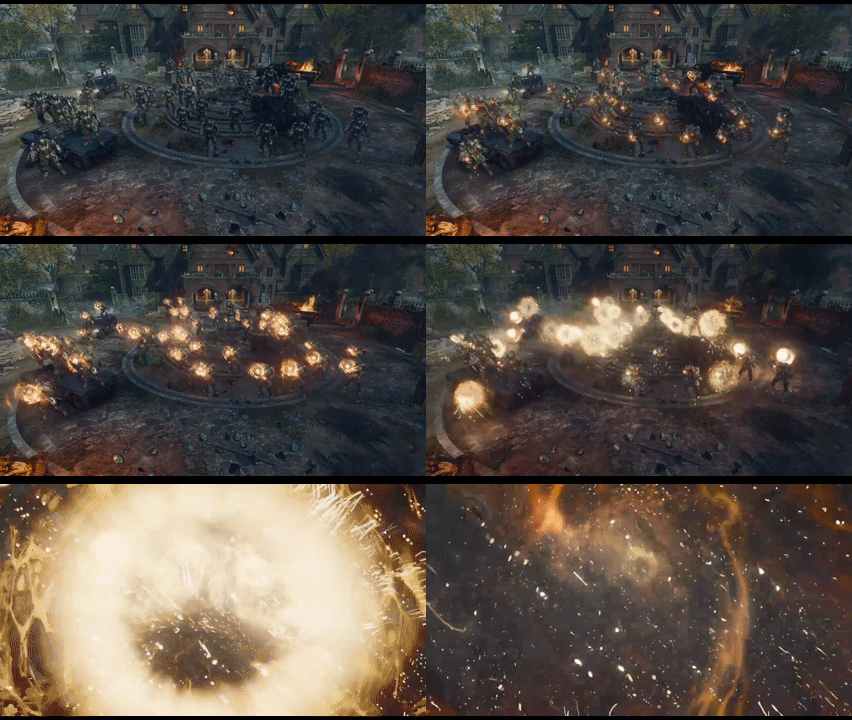
Elder Disciple - Evolving a Parasite into a Doppelghast
Round Spawning & Scaling
I inherited the round spawning and scaling systems and worked on their implementation across multiple Zombies maps. That meant thinking about spawning logic, health values, and damage scaling as one connected experience. As player power increased across rounds, those systems needed to stay coherent so that the match kept escalating without losing readability. Ideally keeping players in a Flow State.
A big part of that work was learning how pressure changes from map to map. Through testing and repeated iteration, I spent time understanding how spawner placement and level design affected tension. Where enemies enter from matters a ton. What sightlines a space allows matters. Is there a flat land or does the ground have uneven terrain? Which AI types are introduced together matters. All these things were considered.
A ranged attacker like a Parasite asks for different movement and awareness than a melee focused base zombie, and those differences and frequency players are dealing with them are what let a round breathe or what turns a round to into a slog or annoying.
The part I am really proud of was helping shape that push and pull so the experience could build toward peaks of tension. The goal was not just to make later rounds harder. It was to make that difficulty curve feel consistent, so that reaching an extreme milestone like surviving 999 rounds felt like a real accomplishment rather than just surviving a battle of attrition.
A Design Challenge was: Players do not experience spawn logic, health scaling, and damage tuning as separate systems. They experience a round that either feels fair and escalating, or confusing and exhausting.
Supporting Development and Workflows
Owning and learning pieces of both enemy design and systemic pacing also pushed me toward workflow improvements. When a game has this many maps, AI types, and tuning dependencies, iteration speed becomes part of design quality. I looked for ways to make testing faster, reduce friction in setup, and get clearer feedback loops so that balance discussions were grounded in real play rather than guesswork. Including documenting improvements that could be made or frictions I had in post mortems
That work also gave me room to support different moments, including capturing footage for April Fools content using familiarity I had built up across so many maps and encounters. It was a small thing on paper, but it reflected something I valued throughout the project: engaging with the players, and looking for opportunities contribute not just to features, but to the team's ability to resonate with the community.

Z-Rex Design Case Study

One of my favorite things I got to design was the Z-Rex, an undead T-Rex boss for the Shattered Veil main quest. A Main Quest is a no checkpoint escape room. With the fight being the finale to that experience, so it needed to land as both spectacle and a challenge for players.
My core goal was straightforward: I wanted players to feel hunted.
Full Boss Fight - Via the internet
Movement and the Arena
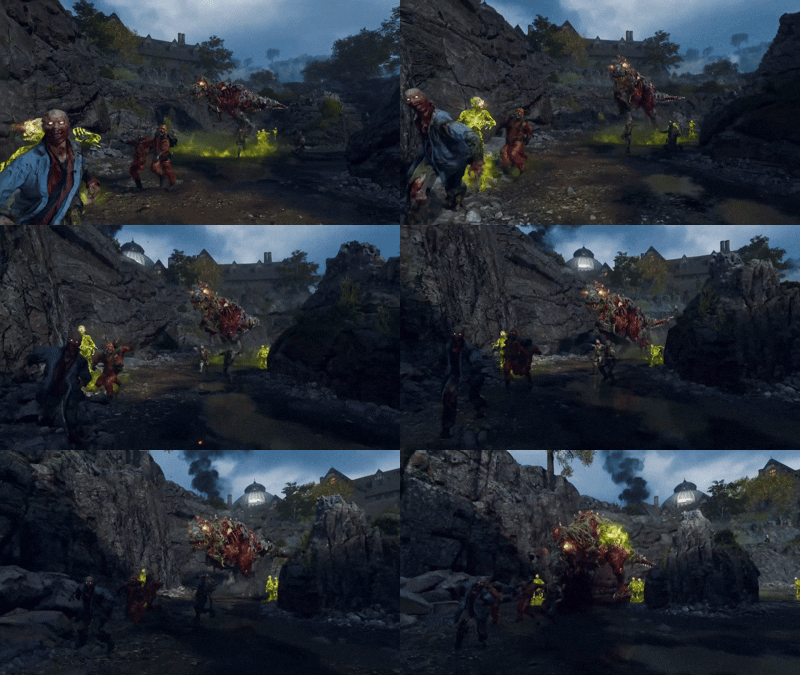
That feeling started with movement. A big part of the early work was making sure the Z-Rex did not feel like a large enemy that simply followed players in straight lines. Working with engineering and animation, we pushed on the idea that it needed to feel like it was stalking prey, curving around space and continuing pursuit in a way that sold intent instead of just pathing. Its scale did a lot of work there too. The Z-Rex already had presence by virtue of being enormous, but presence alone was not enough. I wanted players to feel the pressure of something huge that was actively chasing them down.
That thinking also shaped the arena. Working with Level Design we leaned into a ravine-like structure with columns and rock formations that players could route through, using the environment to break sightlines and buy time without ever fully escaping the threat. Those routes mattered because they gave players room to move while still letting the Z-Rex continue the chase. The goal was not safety. It was sustained pressure and tension always routing back the the pillar of being hunted.
Attacks
That goal also shaped the attack set from the start.
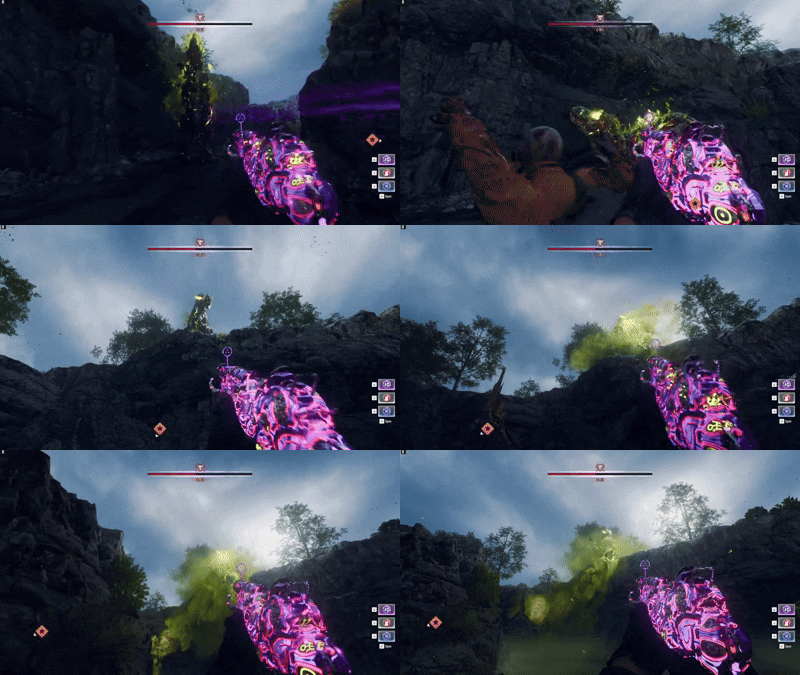
The long range vomit attack was there to punish passive spacing, but more importantly it left behind lingering hazard that slowly reshaped the arena. The fight became more dangerous over time, not just because the boss dealt damage, but because the available escape routes kept shrinking.
The mid range leap gave the boss sudden burst mobility, which helped sell the physicality of a creature that large.
Up close, the bite delivered an immediate and readable forward threat that also fit the fiction of the undead dino, while the tail attack prevented players from treating the rear of the boss as permanently safe.
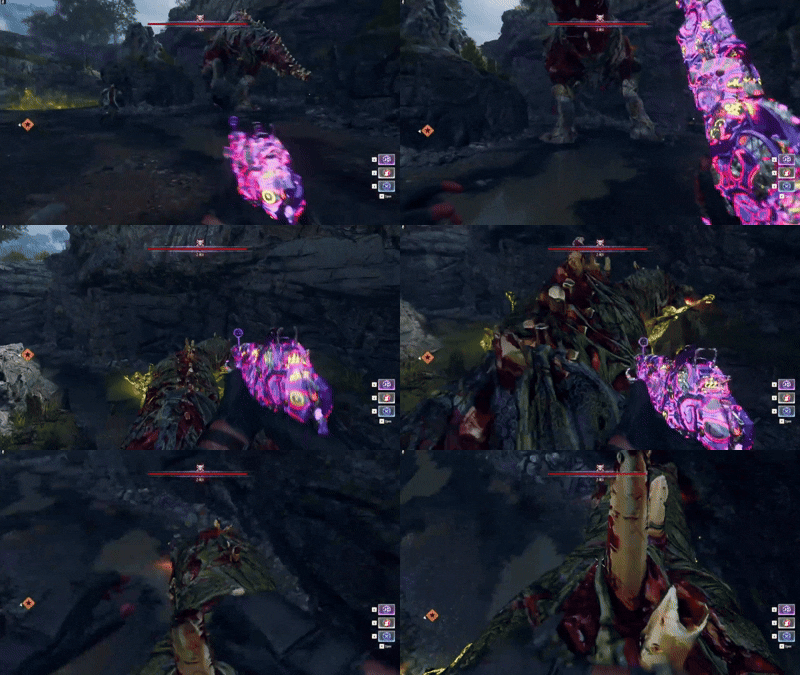
One of my favorite parts of the fight came out of that tail attack. Getting launched by the tail created a high risk gameplay moment wherein players could land on the Z-Rex's back getting some damage. It emerged naturally from the logic of the attack, as well as us the developers having fun making this boss. It then became something worth iterating on and preserving because it expanded the fight's in a way that felt surprising, intuitive, and most importantly fun. It was one of those moments where, once players realized it was possible, they immediately wanted to try it again. I have always taken that as a very good sign.
Design Insight: There is a tension here between making a boss feel oppressive and hard. We also wanted it to feel readable. I wanted the Z-Rex to be overwhelming, but if every attack covered every answer, the fight would stop feeling learnable and start feeling arbitrary. So we introduced the Roar which created moments for players to be rewarded for dodging and escaping the undead dino. As a bonus it had incentives for players to really focus in on the damage to the boss.
Ribcage Weak Point
The ribcage weak point pushed that balance further. Players could damage the Z-Rex anywhere, but they could do significantly more by targeting the zombies embedded in its ribcage. The boss could replenish those by consuming nearby zombies, which created a layered risk and reward. Letting it feed meant more vulnerability windows later, but it also kept more zombies alive in the short term and could make the fight harder before it got easier. That decision asked players to adapt throughout the encounter rather than follow a single solved script, and it became one of the central pieces of the fight's balance.
Design Challenge: What made this tricky was making the ribcage mechanic exciting without making it mandatory. If it became the only correct way to fight the boss, then players who missed the interaction would feel punished for not reading the designer's mind. The solution was to ensure there were multiple path to success.
Richtofen
Also designing the support companion logic around the same principle. Richtofen could assist the player by throwing useful items like armor, equipment, and self revive support, but he was never allowed to solve the encounter. He could help stabilize a run, but he could not take the win away from the player.
In a fight like this, the player is the hero.

Key Design Takeaways on the Project:
The strongest enemies do not just hit hard. They change how players move, prioritize, and evaluate risk from one moment to the next.
A great threat teaches the player how to fight it. Readability matters because it turns failure into learning. If players understand why something happened, they are much more willing to adapt and try again.
Encounter design lives in the space as much as the AI. A boss or enemy archetype becomes more memorable when the arena, sightlines, and escape routes all reinforce the intended behavior.
Optional mastery is better than mandatory knowledge. I like mechanics that reward discovery and skill, but I be wary of encounters collapsing if a player misses one hidden answer. One can do this, always try to ensure this is intentional.
System tuning is part of the fantasy. Spawning, scaling, and pacing are not invisible work. They are a huge part of whether players feel mounting pressure, control, panic, or triumph.
The player should finish the story. Companion help, support mechanics, and spectacle all work best when they heighten the moment without stealing the win.